
Protecting Your Writing Time While Balancing Work & Life
Have you ever heard someone say, “I was going to do that, but life got in the way?” You have probably said it yourself at one time or another. I know I have. If you are a serious author or want to become an author, you must have a daily schedule or at least a specific time every day that you write. If you have a full-time job, it is even more important to stick to a schedule that includes writing. It takes a lot of perseverance, planning, and discipline.
One of the biggest misconceptions about writing is that authors “find time” to write. While this might be true for some, most do not. They intentionally create it. Writing often happens amongst busy schedules, long workdays, family responsibilities, errands, and exhaustion. The truth is, many writers are balancing careers, children, relationships, and everyday life while still trying to pursue their dream of becoming an author. Because of all of this, it is important to “carve” in the time during your day by either setting a time that is your time to write every day, or actually having a written schedule with writing time reserved.
Protecting your writing time does not mean ignoring your responsibilities or shutting people out. It means recognizing that your goals deserve a place in your daily routine. Even thirty minutes of focused writing every day can make a huge difference over time. Small, consistent progress eventually becomes finished chapters, completed manuscripts, and published books.
One of the best things you can do as a writer is treat your writing time like an actual appointment. If you only write “when you feel inspired,” life will almost always fill that space with something else. Some writers wake up early before work. Others write during lunch breaks, late at night, or on weekends. There is no perfect writing schedule. The key is consistency.
The same is true for writers who work part-time or are retired. Some may think that writers in this category have all day, or a partial day, to devote to writing. While this might be true to some extent, there are other responsibilities, such as housework and appointments, that come into play, even though there might not be a job to get to. I am retired from teaching full-time, but I substitute teach, and I am also very busy creating digital products, things that I put on Etsy, among my day-to-day responsibilities. But I do stick to a schedule. I use a “work” calendar that is separate from my personal one.
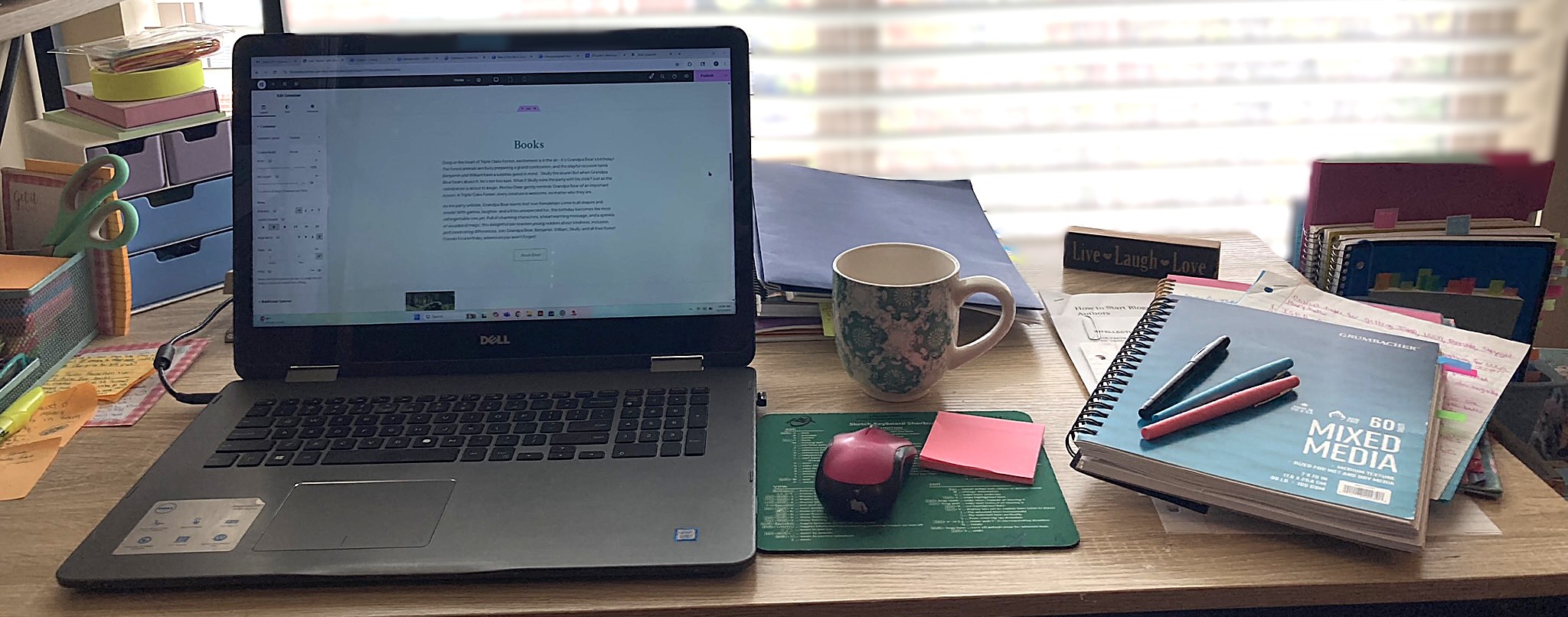
On the days I do not have to substitute, I get up around 7:00 or 7:30 a.m. most days, and get dressed, put my makeup on, and do my hair as if I were going to work. Although I do not put on dress clothes, I feel that this routine helps me get into my “work day” at home. Then, I begin looking at my list of things I have to do and begin tackling them one at a time. It is also important to consistently have a place where you do your writing, whether it be a room that is your home office, the kitchen table, etc. I prefer a home office space where I have everything right by me and a desk where I can work. Once you discipline yourself, it becomes routine and easy. If you are a person who is extremely organized and knows how to juggle a few things at once, then you can take breaks like changing the laundry and then going back to writing, or perhaps needing to go run an errand which couldn’t be done for whatever reason before you started writing for the day. This is okay, but I would suggest that, for the most part, nothing else is done during this time, except writing. If you are lucky to get a full day a few times a week, or so just as it is important to start your day at a certain time, it is important to end your day at a certain time as well. Ending your day at 4:00, or 5:00 p.m. is a good time because you still have a nice chunk of time to make dinner and do what you love to do to relax, spend time with your family, etc.
You also have to learn how to protect your mental energy. Not every free moment has to belong to social media, television, or unnecessary distractions. Sometimes protecting your writing time means saying no to things that drain your creativity. It may even mean setting boundaries with friends and family so they understand that your writing matters to you. Normally, during this time, I concentrate on my work. I treat it as if I were at a job. I don’t talk on the phone to family or friends during this time, and my friends and family know that even though I am at home, I am working. If my phone does happen to ring, I return the call later so that I do not lose my concentration.
Another important thing to remember is that balance does not always look perfect. Some days your job will require more energy. Some weeks, life will feel overwhelming. That does not mean you failed as a writer. It simply means you are human. The goal is not perfection. The goal is persistence. Sometimes we’re tired, sometimes things come up that we had not planned on – this is life, and as we all know, it does happen. But when it does, it’s okay to move things around.
Many successful authors wrote their books while working full-time jobs. They wrote in parked cars, during breaks, at kitchen tables late at night, and in quiet moments before the rest of the world woke up. They did not wait for perfect conditions. They worked with the time they had. And, once you get a routine down or a schedule, it will soon become second nature. Again, the important thing is persistence.
If writing truly matters to you, protect it the same way you would protect any other important commitment in your life. Your story cannot be completed if it is constantly pushed aside for “someday.” If you push it off to the side, oftentimes “someday” never comes, even if we have every intention. There is always going to be something that gets in the way, but your dream of becoming an author deserves a place in your schedule too.