Editing & Self-Editing: Strengthening Your Manuscript
If you have ever written anything, whether it has been a short article, a research paper, or something as simple as an email, you certainly are familiar with editing. After writing, we read through what we have written and make the necessary changes. It is no different when writing a children’s book. In fact, it is crucial. No one likes reading something and finding multiple mistakes. It reflects on the author and conveys unprofessionalism. It also creates distrust for the author.
When writing a children’s book, or any book for that matter, editing is not just done once and is finished. You, as the author, will edit many times before the book is ready to be printed. I remember the first time I showed my mentor the first draft of my book. She read through it once, said it was very good, but then took her red pen and started circling words, etc., all over. My thought was that she said it was “very good”, so why was she circling words and writing all over the pages? I soon learned that it wasn’t necessarily because of my grammar or misspellings (although that is definitely something you need to check too), but because I was using certain words over and over and describing things too much. All of this falls into the category of editing. Once I understood and saw what she was talking about, it clicked. There are other words than using words like ‘and’, ‘he said’, ‘they said’, etc.
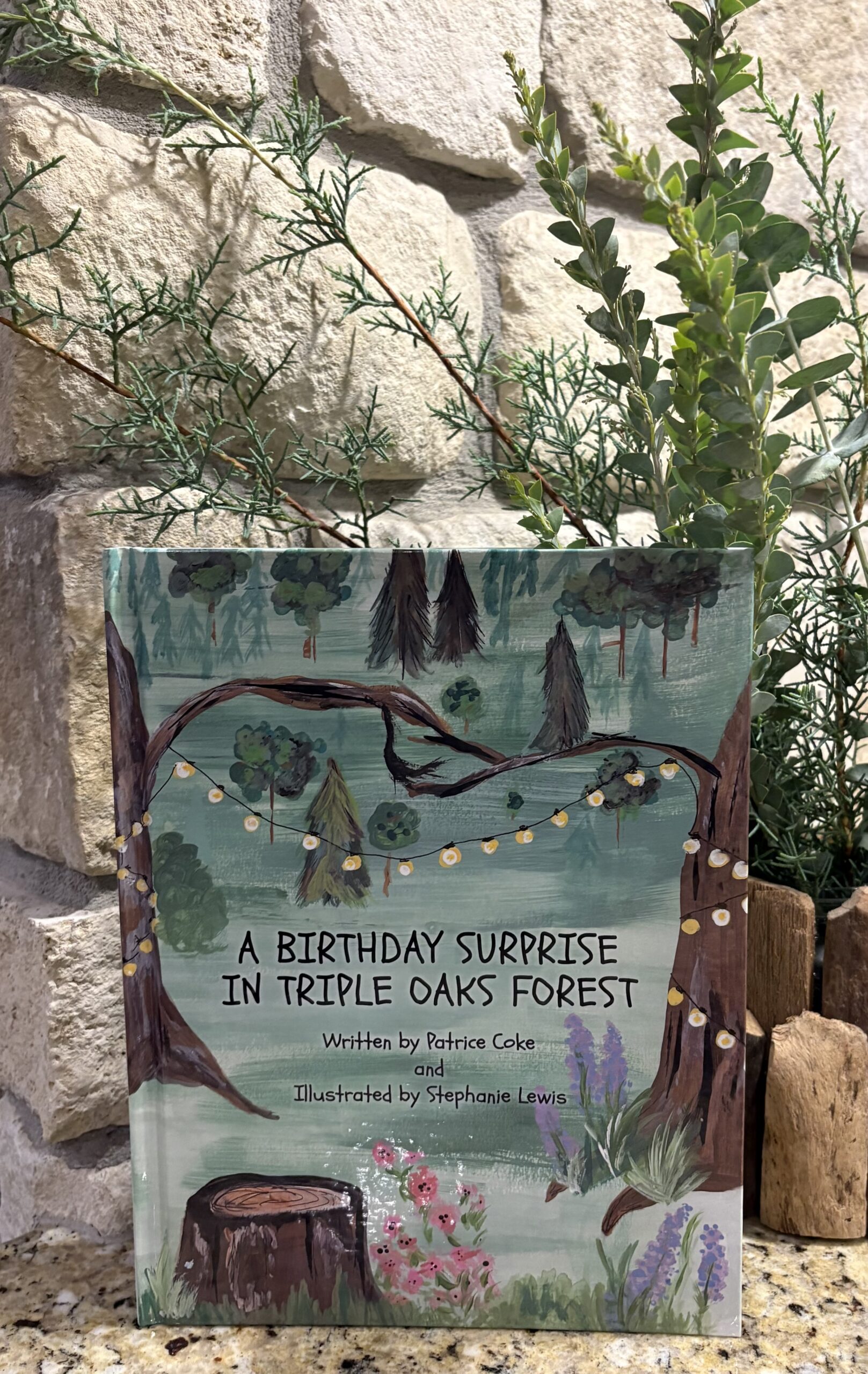
When writing your children’s book, part of making it interesting is to vary words. There’s nothing wrong with using words like ‘and’ or ‘but’; however, you do not want them in sentences that are back-to-back to each other, and you certainly do not want to begin every sentence with the word ‘And’. There are also words to add to the end of a sentence, after the character speaks, instead of ‘they said’ or ‘she said’. Use more descriptive words at the end of your sentences. For instance, if a character yells, at the end of the sentence, you could write, “yelled the girl.” This also helps with describing what is going on without using several descriptive words in your sentence. It also helps to convey to the reader what the mood is of that particular character. In my book, A Birthday Surprise In Triple Oaks Forest, Grandpa Bear, at one point, yells because he is unhappy about something. Instead of saying, “said Grandpa Bear” at the end of the sentence, I said, “Grandpa Bear yelled and grumbled.” Other words you can use in place of the word ‘said’ would be ‘asked’, ‘happily answered’, ‘exclaimed’, or ‘chimed in’, just to name a few. Think about how the character is feeling and use a word to convey that feeling. By doing this, it makes the story more interesting. Also, the reader will be able to envision how the characters are reacting.
Another part of the editing process in a children’s book is to make sure you are not being too descriptive. You have to remember that in a children’s book, the pictures tell the majority of the story. This was a hard concept for me to grasp at first. Everything I was ever taught in school when it came to writing, especially in my Creative Writing classes in college, was to be descriptive! This is not the case when writing a children’s book. When I started writing A Birthday Surprise In Triple Oaks Forest, I described Skully the Skunk, along with the other characters. Much to my surprise, even though it made sense to me afterwards, my mentor crossed out all of those descriptions. Unlike novels, she explained to me that children’s books were different. Fewer words, descriptive pictures! “Let the pictures tell the story!,” she said to me. This makes so much sense when you think about it. As you are reading to them, what are they doing besides listening? Looking at the pictures!
Below are Editing Tips for New Children’s Book Authors. This is intended for you as a guide as you are looking at your manuscript, after you have written it.
Editing Tips for New Children’s Book Authors
- Step away before you edit
Give your manuscript a little breathing room. Even a few days can help you return with fresh eyes and catch things you missed. - Read it out loud
Children’s books are meant to be heard. Reading aloud helps you spot awkward phrasing, rhythm issues, and sentences that are too long or confusing. - Keep the language age-appropriate
Make sure vocabulary, sentence length, and concepts match your target age group. If a word needs explaining, it may not belong. - Watch your word count
Less is more. Picture books especially rely on concise, purposeful language that leaves room for illustrations to tell part of the story. - Focus on clarity over cleverness
A beautiful line isn’t helpful if it confuses young readers. Simple, clear storytelling always wins. - Check for repetition with intention
Repetition can be powerful in children’s books—but only when it’s rhythmic or purposeful, not accidental. - Make sure the message isn’t preachy
Children connect best when lessons are shown through actions and emotions, not explained outright. - Ensure consistency
Double-check character names, personalities, setting details, and tone from beginning to end—especially important in series books. - Leave space for illustrations
Avoid over-describing visuals. Trust that the illustrator will help tell the story alongside your words. - Get feedback from the right readers
Share your manuscript with parents, teachers, librarians, or early readers—not just other writers. - Edit in layers
Don’t try to fix everything at once. Do one pass for story flow, another for language, and another for grammar and punctuation. - Know when to bring in a professional editor
Self-editing is essential, but a children’s book editor brings an expert eye for pacing, age expectations, and market standards. - Protect your voice
Editing should polish your story, not strip it of warmth, personality, or heart.
While the initial draft captures imagination and heart, the editing process shapes that inspiration into a clear, engaging, and age-appropriate reading experience. For new children’s book authors, editing can feel overwhelming, but breaking it into intentional steps makes it both manageable and empowering. In my next blog, I will go more in-depth about each one of these editing tips.
