Bringing Your Book to Life — Choosing Paper, Binding, and Format
Whether you go the traditional publishing way, through a POD company, or self-publishing through a print company, you will need to make several decisions on how you want your book to look. These are important decisions because they can affect the quality of your book. If you skimp on some of these decisions, it will affect your sales. No one wants to buy a book that does not look professionally made. You do not want to cheapen the book with poor decisions. I did not know anything about paper quality or weight, binding, etc., and I relied on a professional to educate me in these areas. I knew a little from researching, but that only allowed me to be able to ask informative questions. It is good to have a little bit of knowledge in these areas, so that during your interview process, you know what to ask.
Let’s take a moment and discuss book size. At one time or another, we have all read or at least have seen a children’s book. If you are at this point in the process, I assume you have looked at and researched children’s books. You should have an idea of what size you want your book. A standard size for a children’s book is 8.5” X 11,” and these are the most economical. Larger books and/or custom sizes add more expense through paper waste. Also, you have to remember it’s a children’s book, and you want the child to be able to pick it up and look at, and/or read it.
Since a standard children’s picture book is 32 pages (this includes the dedication and/or acknowledgment, the title, and the copyright pages, and a blank page depending on where your story begins), you will want to try to keep to this quantity. Whether you self-publish, use a POD company, a traditional publisher, or a printing company, each have their strict guidelines for page counts. Remember, the word count for a children’s picture book is between 500-1,000 words. Also, more pages mean higher paper and printing costs.
Next, you will want to decide whether you want a hardcover or a softcover. For me, this was a no-brainer. I write children’s books, and if you have ever had children, or have been around children, especially the two to three year old range, they are hard on books. You want your book to hold up under certain circumstances. You do not want your book to fall apart or get torn the first day a child has it in its hands. There are softcover books for children out there, but in my opinion, they just do not hold up as long as hardcover books. The second decision is the type of book cover finish you want. These options include a Matte Cover, which does not have a shine to it, or a Gloss Cover. Gloss Covers have a high shine to them, and a smooth texture and finish. In my opinion, for children’s books, a hardcover should be Gloss. It stands out and is more appealing to children. When making this decision, think about what type of illustration you will want for your cover. This might help when deciding on the type of finish you want. It is also important to think about what you will have on the back of your book. Will you have reviews? Will you put a picture of yourself and your illustrator, as well as your biographies, on the back? These are all important decisions you will need to make, especially if you are going the POD or self-publishing route. Something to keep in mind is that if you are going through a POD company, some will charge extra for premium finishes like matte lamination.
Book Binding is another feature you will need to decide. There are two types. The first is Adhesive binding. There are three types of Adhesive binding. One is called Perfect binding, in which the spine of the pages is glued directly to the cover. This is a popular binding for paperbacks. The second is PUR binding. This is similar to Perfect binding, but it is more durable and stronger because PUR (polyurethane) adhesive is used, making the pages more durable and less likely to tear. The third is called Case Binding. Case binding is commonly used for hardcover books. In this case, the book block is sewn or glued and attached to a cover made from cardboard that is then wrapped in paper.
The Second type of Book Binding is the Non-Adhesive binding. One type of Non-Adhesive binding is Saddle stitch. This type of binding is used on brochures and magazines because the sheets of paper are folded and stapled. The second type is Coil, Spiral, or Wire-O binding. Holes are punched on the edge of the paper, and a plastic or metal (like a notebook) is wound through the holes. The third is Case binding (the one that I used on my children’s book). Case binding is a more traditional way to bind a book. There are folded sections of pages sewn together and then attached to a rigid cover. This type of binding creates a more durable book.
Now that we have talked about the outside of the book, there are some important decisions regarding the inside of the book. Interior pages are just as important as the outside of the book. One of the decisions that has to be made is on the backside of the front cover and the inside of the back cover. The first option is keeping it white, the second option is to go with a color that matches the outside cover, or the third option is to go with an illustrated background. For example, my book is set in a forest, so I could have chosen to go with a forest background on the inside cover and the back of the backside cover; however, if you decide to do an illustrated background, just be aware that this will cost more.
The next decision you will have to make is what type of paper your story and illustrations will be printed on. There are many types of paper. These types include cream or white, standard color, premium color, and ultra premium. POD companies like Lulu and IngramSpark offer many of these. Each type of paper is better for some books than others. For instance, black and white is the most economical. Whereas, Premium and Ultra-Premium colors are better for higher color quality. Each one of these also affects the price that you will spend. Printing companies may have all of these types, or just a few to choose from, but normally, they will have what you need for a great quality children’s book.
Paper Weight is something else you will need to decide on. I highly suggest that if you go through a print company that is local, like I did, that in the interview, you ask them to see the different types of paper and feel the weight of it. Normally, they will have a book of the different types of paper (the colors), the type of finish (matte vs. satin and/or glossy), and the weight or heaviness of the paper. If you go with a POD company, you probably will not get to see or feel the paper; however, you might be able to go to a local company and ask them to see and feel different types of paper before you make a decision. Keep in mind that ink and paper options may not be available at all book trim sizes, and not all ink options will be available for all paper options. Trim sizes simply mean the height and width of your finished book. Keep in mind that different sizes can impact printing costs since more material is needed for larger formats.
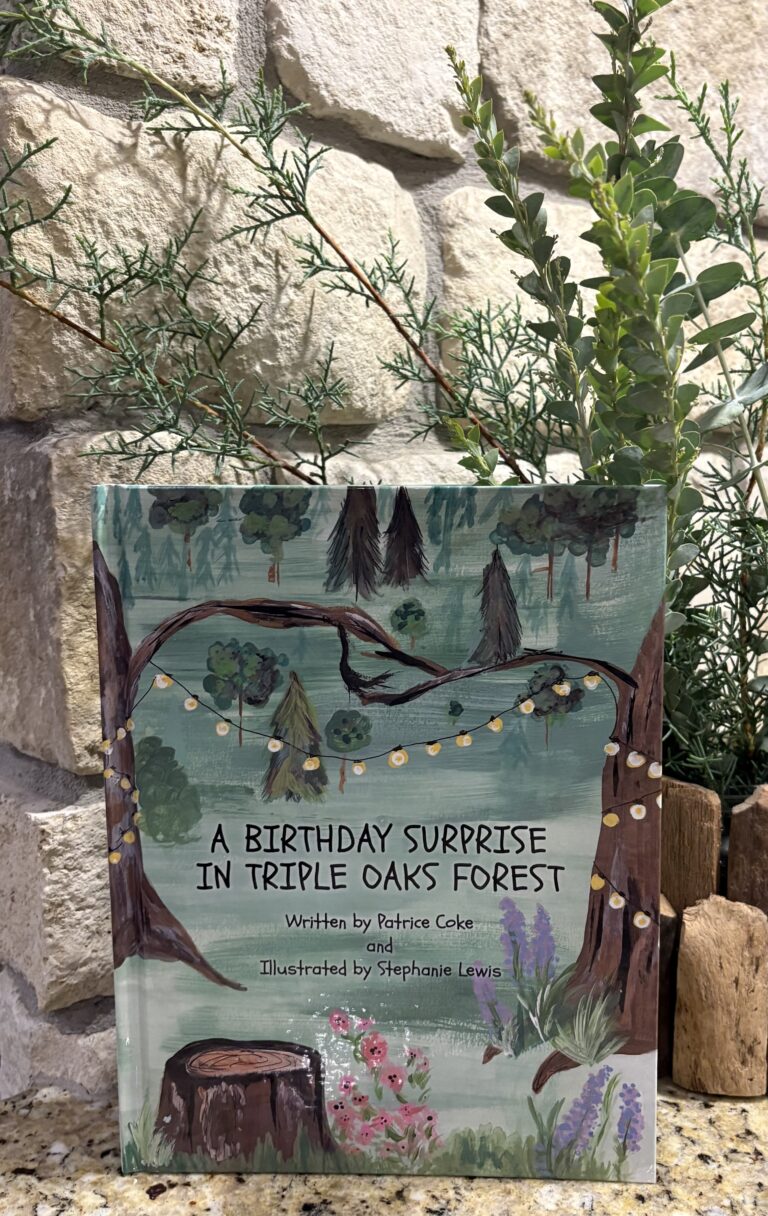
So, you have made all of these decisions, written your first rough draft, and researched, so where do you go from here? The one thing we have not discussed yet is how are you writing your story? Are you writing it the “old-fashioned way” with pen and paper first, and then typing it? Are you typing it to begin with, and if so, what program are you using? I typed my story, A Birthday Surprise In Triple Oaks Forest, in Google Docs. With that said, whether you go with a traditional publisher, self-publish using a printing company, or use a POD company, everyone will have their own preference as far as what program has been used to type it, the style used (MLA, etc.), and they will most certainly need it formatted a certain way. So, let’s discuss formatting. If you are like me, you know nothing about formatting other than that if you do not know what you are doing, it is very difficult. If you do not know how to format, and you try to do it yourself and then you send it to a POD company, this can turn out very badly. And, what is formatting? Formatting refers to the industry-standard layout and visual structure of your manuscript, ensuring it meets professional publishing requirements. In other words, it’s how your manuscript is arranged and presented on the page so it meets professional publishing expectations. One expectation is how the page is set up to include the bleed. A Bleed refers to any design or image element that extends beyond the final trim edge of the page. This technique ensures artwork or color reaches the very edge once the book is cut to size, preventing unwanted white borders that can occur from minor paper shifts during trimming. Bleed is essential for full-page illustrations, backgrounds, and designs intended to cover the entire page. It enhances the overall presentation, giving the book a polished and professional look. If a book is not formatted well, there could be large blocks of text in the wrong places, which can be confusing to the reader. In my research, I ran across several articles that said that formatting in industry-standards is very difficult and should not be done by anyone who does not know what they are doing. Spend the extra money to have the formatting done for you. You will not regret it. When more than one source was saying it, I was not about to attempt it. Traditional publishers, POD companies, and printing companies all have people who format, so it is worth the extra money.
Font is something else to decide. When choosing a font, think about the tone and mood of your story. The font you choose affects how easily children can read, connect with, and enjoy your story. In many ways, the font serves as an unseen narrator, shaping how children experience the story. Additionally, the font adds emotion and personality to your words. Your font choice helps the story “speak” visually to young readers. With this being said, you do not want to pick a font that cannot be easily read, or, of course, in cursive. In A Birthday Surprise In Triple Oaks Forest, the message of the story is kindness and including others, but there is also a playful tone, so I chose the font, School Bells, because I thought it was the best match for the mood and tone of the story. It also went with the playful characters. So, pick a font that you like, meets the tone and mood of your story, and is easy to read and connect with, for the reader.
I am sure you are saying, but what is the cost, because for most of us, even though quality is number one, the cost of how much it is going to be is a close second. And, as we all know, when it comes to great children’s books, you really do not want to skimp on quality, but you also have to factor in the ultimate question of the bottom line, which is how much is it going to cost? For me, after all of my research and putting pen to paper, going through a printing company was the most inexpensive of all. Sure, with most of the POD companies, you do not have to worry about buying and selling your books yourself, which do not get me wrong, that’s a plus, however, you lose some of the control, and most often than not there are hidden fees, or upfront costs that you do not have when you are going through a printing company.
In my interview with Valley Offset Printing Company (the company I went with), I knew exactly how much it was going to cost me after the interview. At the time that this book was written, the total cost for 200 books was $3,447.74. This dollar amount includes the formatting of the book, which was $375.00. If my illustrator had not designed the front cover, it would have been $440.00.
I never had any issues with the person who was handling my book; my emails were answered in a timely fashion, and I could also pick up the phone and usually get an answer to a question right then and there. I had control, and the cost of looking at the proofs and the formatting (which was a little extra) of the book was all quoted to me. No surprises. All of this combined made sense for me. And, a huge plus, since they were a local company, I got to go have my picture taken as the first book was being printed! Seeing the pages come off the printer was an amazing feeling. It was finally happening. Then, I got to put those pictures in my newsletter! You cannot do that with a POD company. To me, there were no cons to doing it this way, and I have gotten rave reviews.